Glasser Aotearoa New Zealand
Choosing • Connecting • Changing
Choosing how you want your life to be
Choosing to view life through the lens that allows you to move past the exhausting cycle of blaming external circumstances for your unhappiness you can replace it with the quiet joy of knowing how you want to be is within your power to cultivate. By consciously choosing behaviors that nourish your needs you can create a life defined by intentionality and grace rather than reactive stress.
WHAT DO YOU REALLY WANT?
Better relationships?
A happier family life?
A joyful classroom?
HOW CAN GANZ HELP?
We offer training that will help you to get closer to what you want.
HOW CAN YOU ACCESS THIS TRAINING?
Contact one of the instructors in the scroll down menu.
William Glasser MD
Dr. William Glasser was a psychiatrist who challenged the prevailing way of thinking in his field. In his early career, he developed a unique counseling approach called Reality Therapy. This approach focused on personal responsibility and choice rather than traditional methods that may have emphasised mental illness or external factors. Later, he built upon Reality Therapy and developed Choice Theory® as a logical and wide-ranging way of understanding behaviour.
Through the William Glasser International Mission Statement, we aim to teach the world a new model for living to create individual wellbeing, fulfilling relationships and satisfying work and learning environments. (WGI Mission Statement)
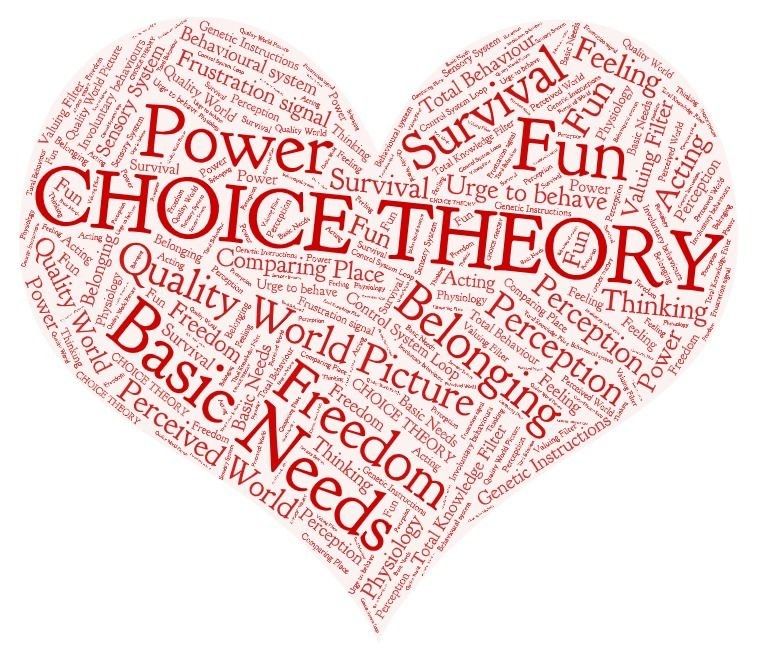
CHOICE THEORY
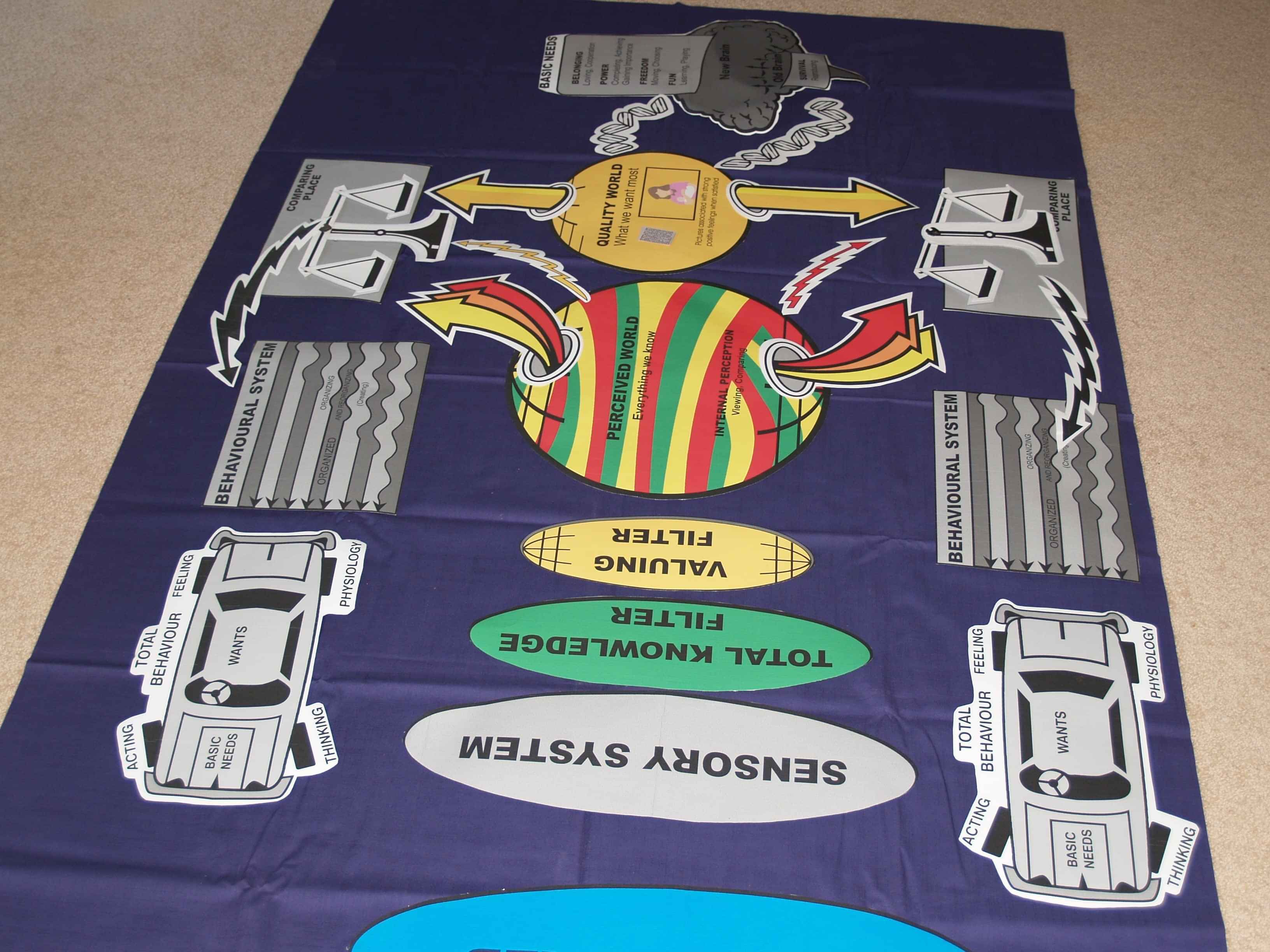
Choice Theory explains why and how we behave the way we do. It states that all we do is behave, that almost all behaviour is chosen, and that we are driven by our genes to satisfy five basic needs: survival, love and belonging, power, freedom, and fun. In practice, the most important need is love and belonging, as closeness and connectedness with the people we care about is a requisite for satisfying all of our needs.
REALITY THERAPY
Reality Therapy is the method of counseling that Dr. Glasser developed in 1965. It is now firmly based on Choice Theory and its successful application is dependent on the counselor’s familiarity with, and knowledge of that theory. Teaching Choice Theory to counselees (whether clients or students) is part of Reality Therapy.
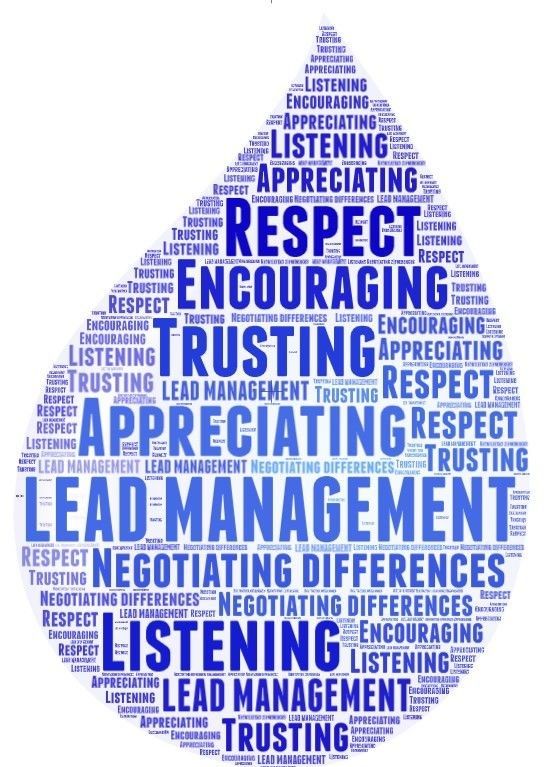
LEAD MANAGEMENT
Lead-managers continually work on the system to create a non-coercive environment within which workers (in schools, students) can self-evaluate and achieve quality work. The only way any organisation will achieve its goal – quality work – is if the lead-manager can persuade those in the organisation to continually upgrade the system by communicating in ways that build trust
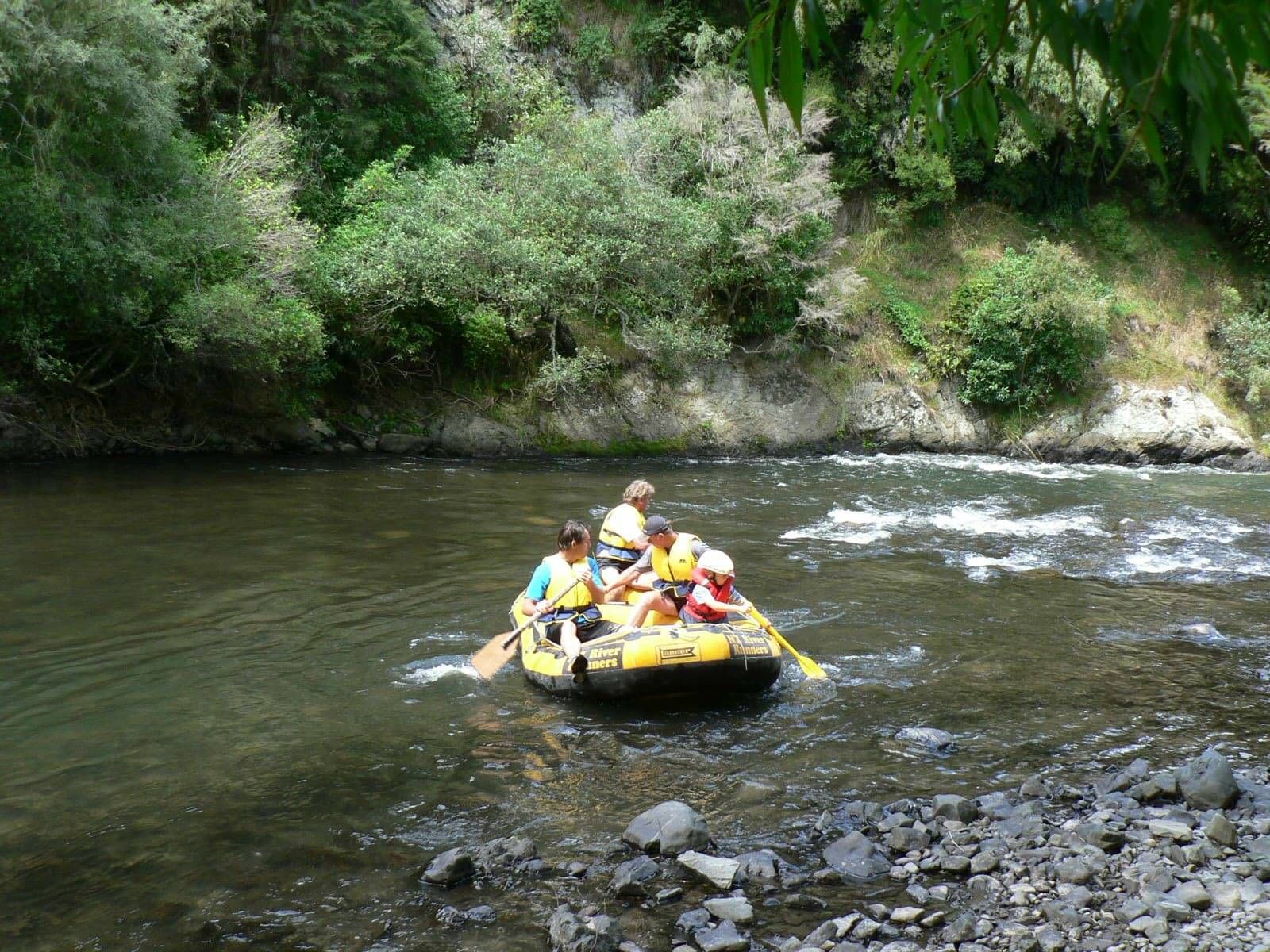
Choices
We almost always have choices and the better the choice, the more we will be in control of our lives.
William Glasser MD
Behaviour
What we have to understand is that the only life we can control is our own and, in almost all instances we can choose to change.
William Glasser MD
Relationships
Success in any endeavour is directly proportional to how well the people who are involved in it get along with each other.
William Glasser MD
GLASSER QUALITY SCHOOL
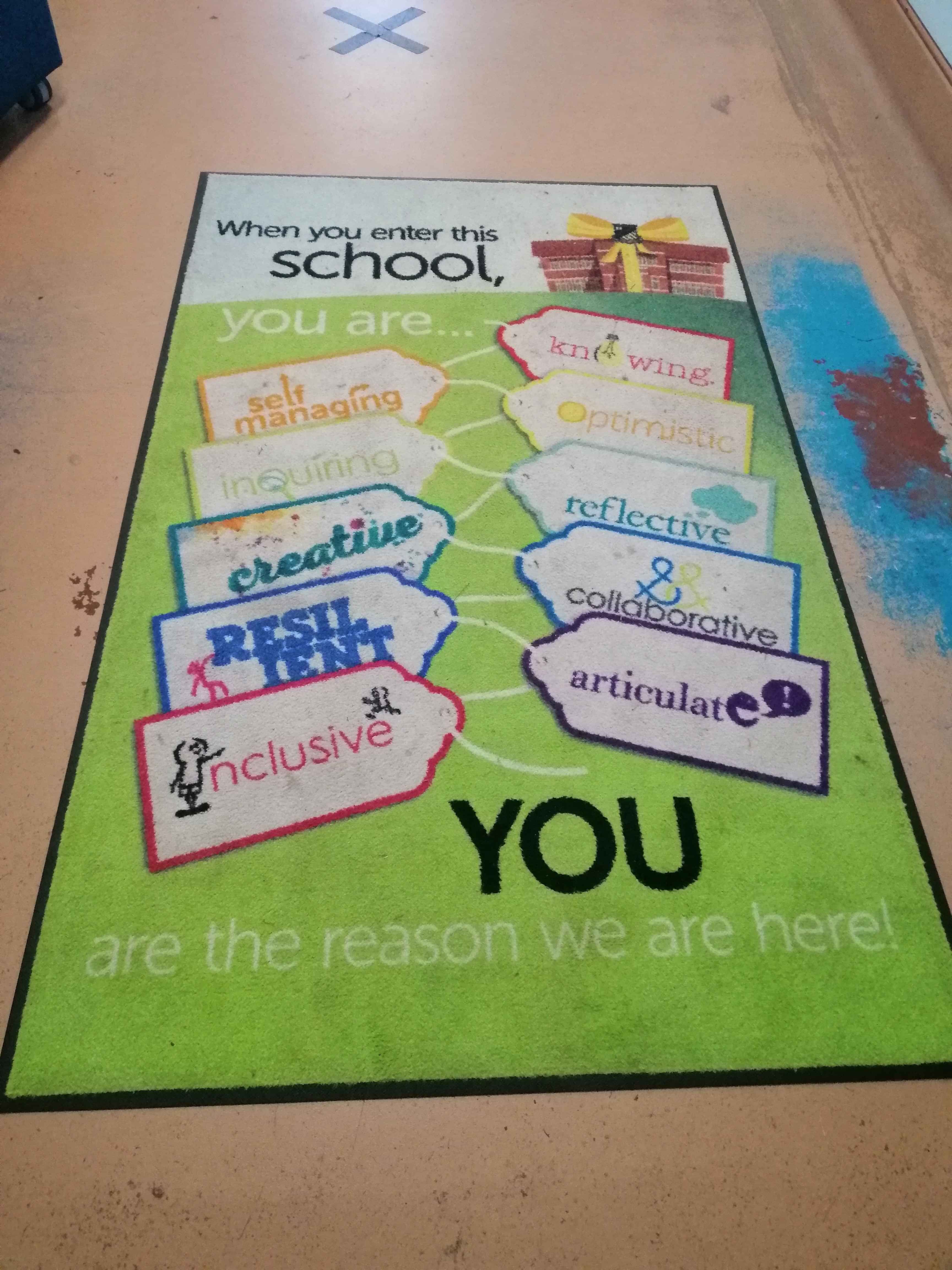
In a Glasser Quality School, students and teachers understand and use Choice Theory to create a supportive, caring environment and build healthy relationships that contribute to school success
A school can become a Glasser Quality School when both staff and students apply practices that are based on internal control psychology.

Relationships
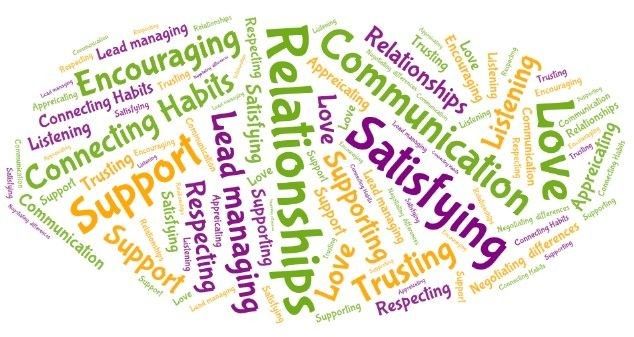
If we want to get along with each other we need to replace behaviours that push us apart and use ones that bring us closer together. Criticising is one of the most destructive behaviours we habitually use. Nagging and complaining come a close second. These behaviours are usually someone's best attempt to make another person do something that they think they should . We are trying to control others by using these behaviours.
If we want to build quality relationships we need to give up these controlling behaviours.
Q&A
Who can benefit by knowing Choice Theory?
Essentially, any human with a pulse can benefit from Choice Theory. Whether you’re a toddler in a Glasser Quality School or a retiree looking to understand grandchildren, Choice Theory is a 'universal language' of human behavior. Regardless of race, gender, or background, anyone can apply these concepts to gain greater control over their lives and build more fulfilling relationships.
Who can do Glasser Training?
Individual people wanting help in moving forward. Anyone who works with others, parents and educators, partners and spouses, managers and workers, mental heath workers, counsellors, corrections personnel. Generally, those over the age of eighteen can apply for the full training.
How many stages of training are there?
Basic Training to Certification includes five stages. Basic Intensive Training, Basic Practicum, Advanced Intensive Training, Advanced Practicum, Certification. Following Certification, a member of William Glasser International can be mentored to present the Take Charge of Your Life workshop. Undertaking two more levels of training, a Practicum Supervisor and Basic Intensive Training Instructor are ready to conduct these levels as endorsed Instructors. Senior Instructor is the final stage of training with William Glasser International.
What does the training cover?
1. Choice Theory: The "Why"This is the psychological heart of the training. It teaches you how the human brain functions as a ‘control system’.
The Five Basic Needs: You learn to identify which needs are driving your behavior (and the behavior of others).
The Quality World: Learning how to identify the "mental picture album" of people, beliefs, and things that we value most.
Total Behavior: Understanding that every behavior has four components: Acting, Thinking, Feeling, and Physiology.
The Seven Connecting vs. Disconnecting Habits: Replacing disconnecting habits like criticising and blaming with connecting habits like supporting and encouraging.
2. Reality Therapy: The "How" Reality Therapy is the practical application of Choice Theory, primarily used in counseling, coaching, or conversations in classrooms.
The WDEP Model: This is the "engine" of Reality Therapy:
W (Wants): Helping someone clarify what they actually want from a situation.
D (Doing): Looking at what they are currently doing to get it.
E (Evaluation): A crucial "reality check"—asking, "Is what you are doing getting you closer to what you want?"
P (Planning): Creating a simple, attainable, and immediate plan for change.
The Counseling Environment: Learning how to build a safe, non-coercive relationship so that the "client" or student feels safe enough to self-evaluate.
3. Lead Management: The ‘Leadership’ This applies the theory to workplaces, classrooms (Quality Schools), and organisations.
Boss vs. Leader: Training contrasts ‘Boss Management (using rewards and punishments) with "Lead Management" (inspiring intrinsic motivation).
Eliminating Coercion: Learning techniques to manage people without using fear, criticism, or ‘the carrot and the stick’.
Self-Evaluation as a Standard: Instead of a manager or teacher grading an employee or student, the Lead Manager teaches the employee or student how to evaluate their own work against a standard of quality.
Systemic Problem Solving: Shifting the focus from blaming individuals for poor performance to looking for flaws in the system that prevent people from succeeding.
What are different opportunities for those wanting a shorter training?
Take Charge of Your Life is a six hour workshop presented either as a face to face to face workshop or an online workshop. These hours can be spread across a week or held all in one day.